56. Do you treat cervical and neck problems?+
Yes, cervical spondylosis and neck stiffness — common among Noida's desk professionals — respond very well to our therapy protocols combining gentle asanas, posture retraining, and pranayama.
57. Is yoga helpful for diabetes?+
Yes, our lifestyle-disease programs combine evidence-informed asanas, specific pranayama, relaxation, and dietary guidance. Members regularly report measurable improvement in sugar levels with consistent practice.
58. Can yoga help control blood pressure?+
Yes, calming asanas, slow pranayama, and deep relaxation support blood pressure management. With medical clearance, cardiac-safe batches are available under careful supervision.
59. Do you have programs for thyroid imbalance?+
Yes, thyroid support is part of our lifestyle-disease management — specific asanas, ujjayi and other pranayama, and routine guidance that complement your medical treatment.
60. Is there yoga for PCOD and hormonal health?+
Yes, our women's health programs address PCOD, irregular cycles, and hormonal balance through therapeutic asanas and pranayama — delivered sensitively in ladies batches or personal sessions.
61. Can yoga reduce stress and anxiety?+
Yes, calming practices, bhramari pranayama, Yoga Nidra, and meditation measurably reduce anxiety and chronic stress. Many members join specifically for burnout recovery.
62. Will yoga improve my sleep?+
Most members report deeper, easier sleep within 2–3 weeks — the combination of physical practice, slow breathing, and guided relaxation naturally resets the nervous system.
63. Is prenatal yoga available for expectant mothers?+
Yes, certified prenatal yoga runs at the studio and as home sessions — safe trimester-specific asanas, labour-preparation pranayama, pelvic floor strengthening, and deep relaxation.
64. Do you offer postnatal yoga for new mothers?+
Yes, postnatal programs support postpartum recovery, core restoration, pelvic floor rehabilitation, and emotional well-being — as gentle studio sessions or home classes.
65. What is aerial yoga like for a beginner?+
The hammock starts low with fully supported poses — no strength or flexibility needed on day one. Instructors progress you safely toward floating poses and inversions step by step.
66. What are the benefits of aerial yoga?+
Spinal decompression, deep core strength, faster flexibility gains, improved balance, and joyful stress release — with less pressure on wrists, knees, and lower back than mat practice.
67. What is Vinyasa flow?+
A moving meditation where poses link smoothly with breath — one breath, one movement. It builds endurance, grace, and focus, and forms the base of our dynamic batches.
68. What is Yin and Restorative Yoga?+
Slow, deeply held, prop-supported poses that release fascia, calm the nervous system, and restore energy — the perfect counterbalance to busy city life and intense workouts.
69. What is Kundalini Yoga?+
A practice combining dynamic kriyas, breathwork, mantra, and meditation to awaken inner energy — taught authentically with proper preparation and guidance.
70. What is Chair Yoga and who should try it?+
Yoga adapted with chair support — ideal for seniors, office workers, and anyone with limited mobility. It safely builds strength, circulation, and flexibility without floor work.
71. Which pranayama techniques are taught?+
Anuloma viloma, bhramari, kapalabhati, bhastrika, ujjayi, and sheetali among others — each taught with correct, safe methodology and matched to your health profile.
72. What is Yoga Nidra?+
A guided conscious-relaxation practice done lying down — often called yogic sleep. Twenty minutes can feel as restorative as hours of rest, excellent for stress and insomnia.
73. Do classes include meditation?+
Yes, most sessions close with breath awareness or short meditation, and dedicated meditation batches go deeper into mindfulness, mantra, and trataka practices.
74. Is yoga good for lung health and breathing issues?+
Yes, specialized pranayama programs support asthma management, allergy relief, and respiratory strengthening — particularly valuable during Noida's high-pollution winters.
75. Can heart patients practice yoga at your studio?+
Yes, with medical clearance — gentle cardiac-safe programs use safe asanas, slow pranayama, and deep relaxation under careful supervision.
76. Is yoga useful for athletes and gym-goers?+
Very — sports yoga improves flexibility, speeds recovery, prevents injuries, and sharpens breath control and focus, complementing running, cricket, swimming, and strength training.
77. Will yoga improve my posture?+
Yes — practice opens desk-rounded shoulders, strengthens the back and core, and retrains body awareness. Members often hear "you look taller" within a couple of months.
78. How soon will I see results?+
Better sleep, reduced stiffness, and improved energy typically come within 2–3 weeks; visible changes in flexibility, strength, posture, and weight appear within 2–3 months of consistent practice.
79. Does the instructor correct my poses personally?+
Yes — small batch sizes exist precisely for this. Instructors give verbal and gentle hands-on alignment corrections (always with your consent) throughout the class.
80. I'm very inflexible — will I hold the class back?+
Never. Every pose has beginner variations and prop support, and everyone practices at their own level. Flexibility is the outcome of yoga, not the entry ticket.
81. Can I do yoga if I have knee problems?+
Yes — inform your instructor, and poses are modified with props and chair support. Therapeutic sequences actually help strengthen the muscles around the knee.
82. Is yoga safe after surgery or injury?+
With your doctor's clearance, yes — share your medical history at enrollment and our therapists design a safe, graded return-to-practice protocol for you.
83. Do you teach yoga philosophy too?+
Yes, philosophy is woven into regular teaching and studied deeply in TTC — Yoga Sutras of Patanjali, Bhagavad Gita, Hatha Yoga Pradipika, and Upanishads.
84. What is the difference between yoga and stretching?+
Stretching works muscles; yoga integrates breath, awareness, strength, balance, and mind — producing benefits for the nervous system and emotions that stretching alone cannot.
85. Do you provide diet guidance with classes?+
Yes, members in therapy, weight management, and wellness programs receive practical dietary and daily-routine guidance based on yogic and Ayurvedic principles.
86. What is sound healing and does it work?+
Sound baths use singing bowls and gongs whose vibrations induce deep relaxation. Members describe profound calm, better sleep, and emotional release — it's among our most loved sessions.
87. Are there batches focused only on flexibility?+
Deep-stretch and mobility-focused sessions run within our schedule, and aerial yoga accelerates flexibility further through supported gravity-assisted stretching.
88. Can teenagers join regular adult batches?+
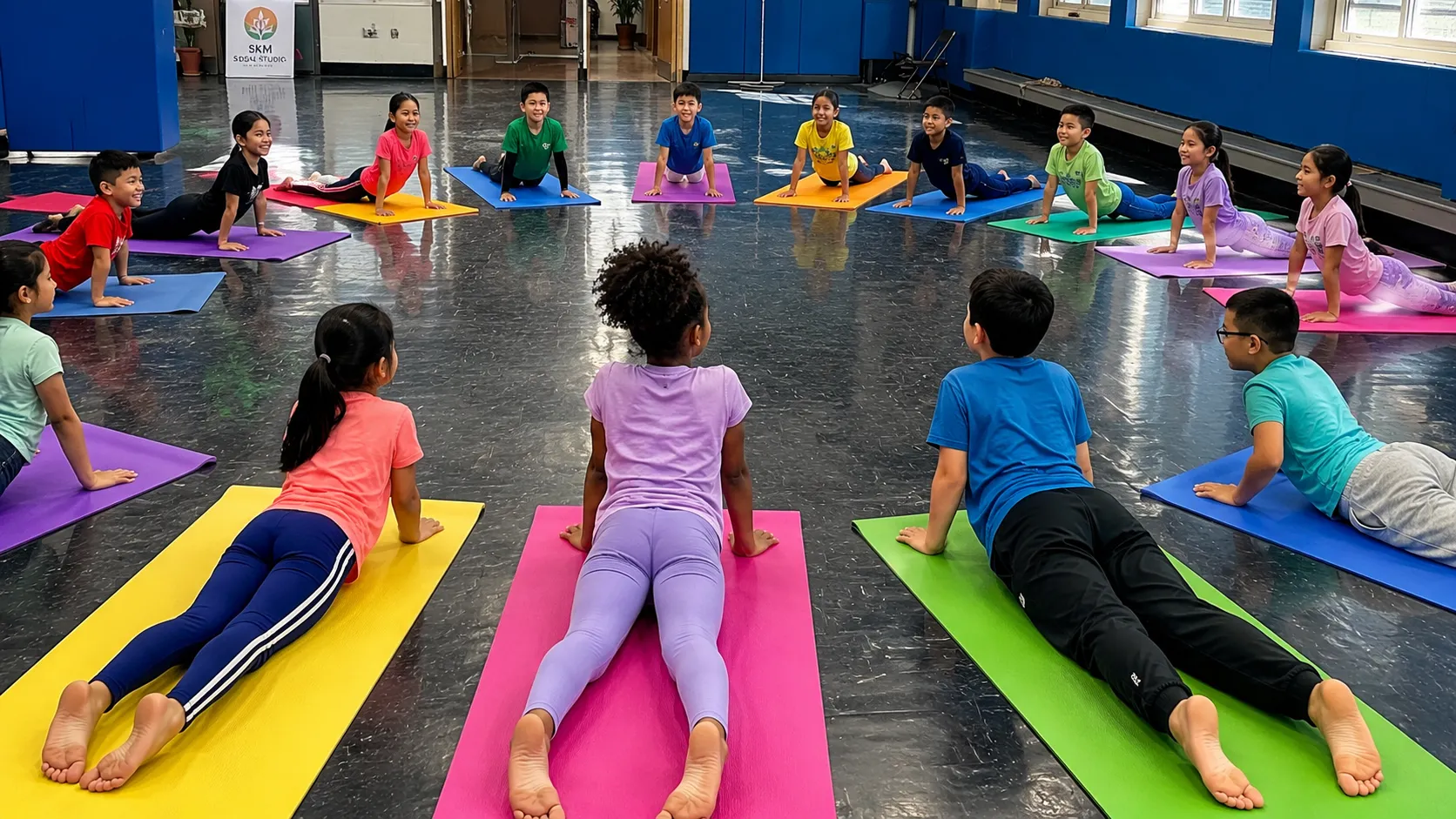
Teens above 16 may join regular batches with parental consent; younger children practice in dedicated kids batches designed for their age group.
89. Do men attend yoga classes here?+
Absolutely — a large share of our members are men, especially in power yoga, aerial, and therapy batches for back pain and stress management.
90. What if I feel pain during a pose?+
Stop and inform the instructor immediately — sharp pain is never pushed through. The pose is modified or substituted; safe progression is our core teaching principle.
91. How is the hygiene maintained in classes?+
Daily sanitization of mats, hammocks, and props, well-ventilated halls, clean bathrooms, and comfortable spacing between mats — a fresh environment every single day.
92. Do you track member progress?+
Yes, instructors track flexibility, strength, and program-specific milestones through your journey, and adjust your practice as you advance.
93. Are certificates given for completed courses?+
Yes, all certification programs — TTC, Aerial, Sound Healing, Meditation, and Yoga Nidra facilitator courses — carry internationally recognized certification with alumni mentorship.
94. Can learning yoga here become a career?+
Yes — complete our TTC, build teaching hours at the studio, and grow through the SKM network's teaching opportunities across 20+ branches and international centres.
95. Do online class students get personal attention?+
Yes, online batches are kept small with cameras on for real-time alignment corrections — it's a live class, not a recorded video.
96. What time should I arrive before class?+
Arrive 10 minutes early to settle in, set your mat, and begin with a calm mind. Latecomers may join quietly but miss the important warm-up.
97. Can I practice yoga during periods?+
Yes, gentle practice is fine and often relieving — inversions and intense core work are avoided those days. Instructors guide suitable modifications discreetly.
98. Is morning or evening practice better?+
Both work — mornings give energy and consistency; evenings release the day's stress. The best time is simply the one you can maintain daily.
99. Do you organize yoga workshops and special events?+
Yes, weekend workshops, themed sessions, sound baths, aerial photoshoot days, and community camps run round the year — follow @skmyoga for announcements.
100. How do I start my yoga journey with SKM Yoga today?+
Book your free trial class — visit F-18, Sector 39, Noida, call or WhatsApp 8920921620, or go to skmyoga.in. One hour on the mat, and your journey begins.